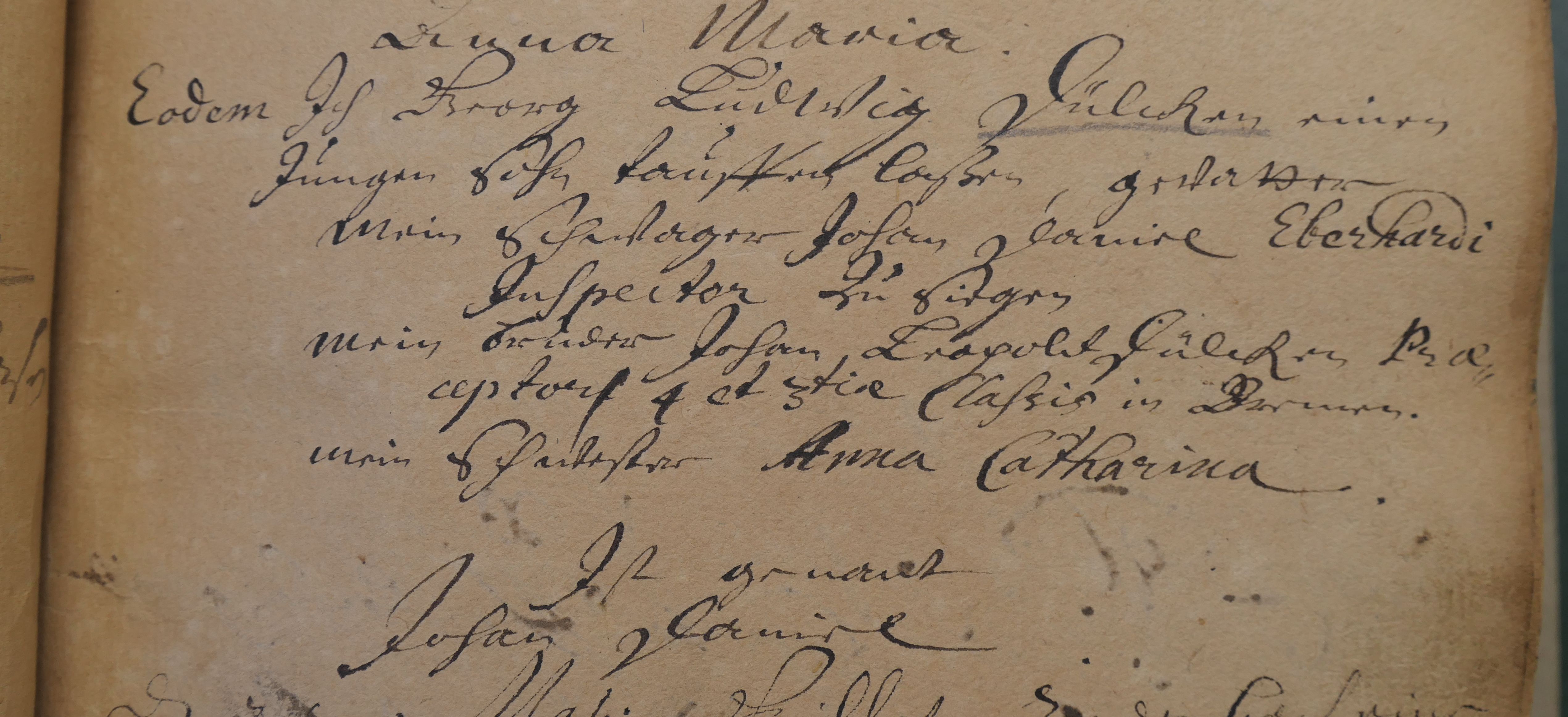
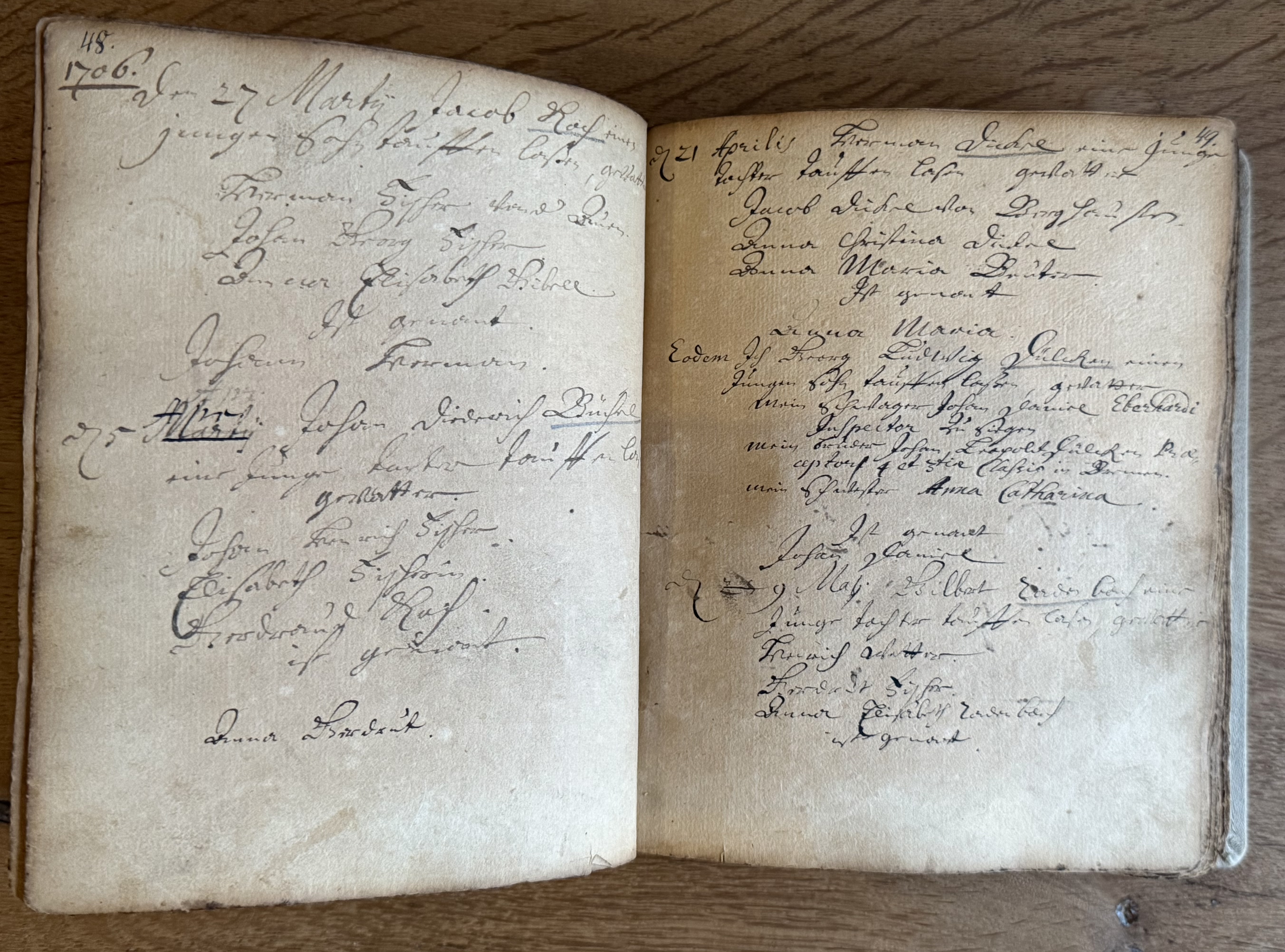
Eodem Ich Georg Ludwig Dülcken einen
Jungen sohn tauffen laßen, gevatter:
mein Schwager Johan Daniel Eberhardi
Inspector zu Siegen
mein Bruder Johan Leopold Dülcken,Prae=
ceptore 4 et 3 ter Classis in Bremen
mein schwester Anna Catharina.
Ist genant
Johan[n] Daniel.
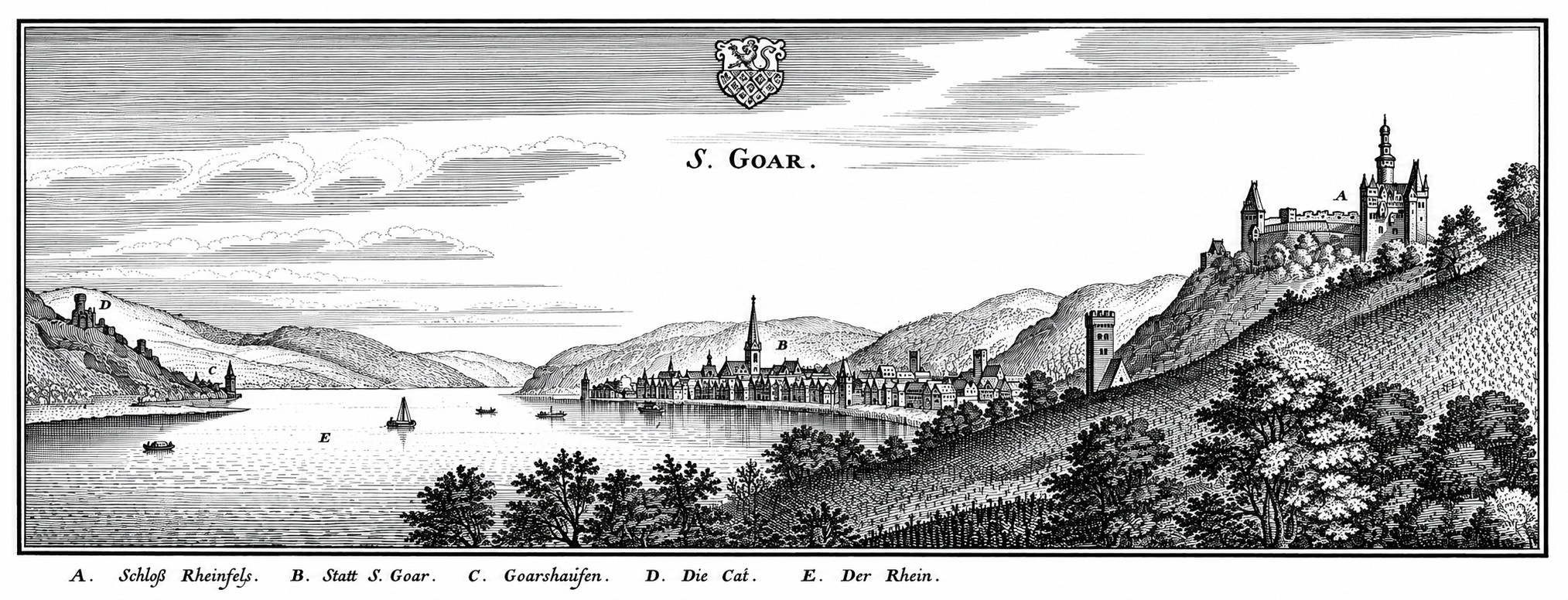
🇩🇪 Johann Conrad Knöpfel - Sankt Goar/Burg Rheinfels
H[errn] Johann Conrad Knöpffels, Proviant-Com[m]issarii u[nd] Stiffts-Kellners allhier
🇬🇧 Johann Conrad Knöpfel - Sankt Goar/Burg Rheinfels
Mr. Johann Conrad Knöpffel, Commissar of Supplies and Collegiate Monastery Cellarer here
🇳🇱 Johann Conrad Knöpfel - Sankt Goar/Burg Rheinfels
De heer Johann Conrad Knöpffel, proviantcommissaris en stichtsrentmeester alhier
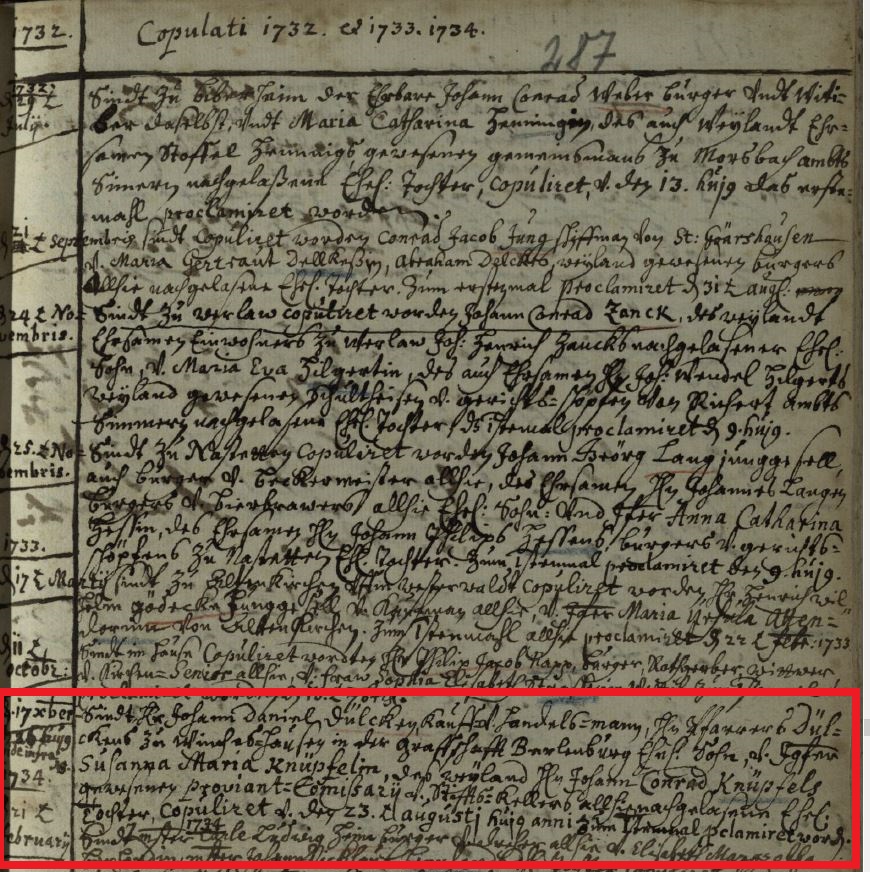
Heiratseintrag Johann Daniel Dülcken und Susanna Maria Knüpfelin - transcriptie Dr. Johannes Burkardt
17. [Decem]ber * Sindt H[er]r Johann Daniel Dülcken, Kauff- u[nd] Handels=mann, H[errn] Pfarrers Dül= ckens zu Winches=hausen (sic!) in der Graffschafft Berlenburg Ehel[icher] Sohn, u[nd] J[ung]fer Susanna Maria Knüpfelin, des weyland H[errn] Johann Conrad Knüpfels gewesenen proviant=Com[m]issarii u[nd] Stiffts=Kellers allhie, nachgelasene Ehel[iche] Tochter, copuliret u[nd] den 23 t[en] augusti hui[us] anni zum I stenmal p[ro]clamiret word[en]. * Darunter Eintrag mit blasserer Tinte, aber von gleicher Hand: „16. hui[us] de infra. N[ota] B[ene].“
Eheschließung des Kaufmanns und Händlers Johann Daniel Dülcken, Sohn des Pfarrers Dülcken zu Wingeshausen in der Grafschaft Berleburg, mit Susanna Maria Knüpfelin, Tochter des verstorbenen Proviant-Commissairs und Stift-Kellners Johann Conrad Knüpfel, am 17. Dezember 1733
(Für den Eheeintrag von 1733 gilt: Archiv der Evangelischen Kirche im Rheinland, Boppard, KB 149/1 (St. Goar ref.), S. 287.)
17. [Decem]ber – Der Herr Johann Daniel Dülcken, Kaufmann und Händler, ehelicher Sohn des Herrn Pfarrers Dülcken zu Wincheshausen (sic! [gemeint ist Wingeshausen]) in der Grafschaft Berleburg, und Jungfrau Susanna Maria Knüpfelin, eheliche hinterlassene Tochter des weiland Herrn Johann Conrad Knüpfel, zu Lebzeiten Proviantcommissar [für die Festung Rheinfels] und Stiftskellner allhier, copuliert, nachdem sie am 23. August dieses Jahres zum 1. Mal aufgeboten worden sind. (Darunter ein Eintrag in blässerer Tinte, aber von derselben Hand: „16ten dieses [Monats] von unten. Nota bene.“)
Stifts-Keller: Der höchste Finanzbeamte und Rentmeister des Stifts, verantwortlich für die Finanzverwaltung, das Einziehen der Pachten und die Administration der Besitzungen.
Proviant-Commissarii: Der Logistikbeamte, verantwortlich für die Vorratshaltung und Verpflegung (wie Getreide, Lebensmittel und Ausrüstung) der strategischen Reichsfestung Rheinfels zu Sankt Goar.
Historischer Kontextpunkt: Die Bezeichnung „allhier“ bestätigt den Ort der Eheschließung in Sankt Goar, genau am Fuße der Festung Rheinfels und Sitz des Stifts St. Goar.
(Wingeshausen 21 april 1706 – † Antwerpen 11 april 1757 - buried in Putte
(Sankt Goar 11 september 1706 - † Heerde 12 juni 1789)
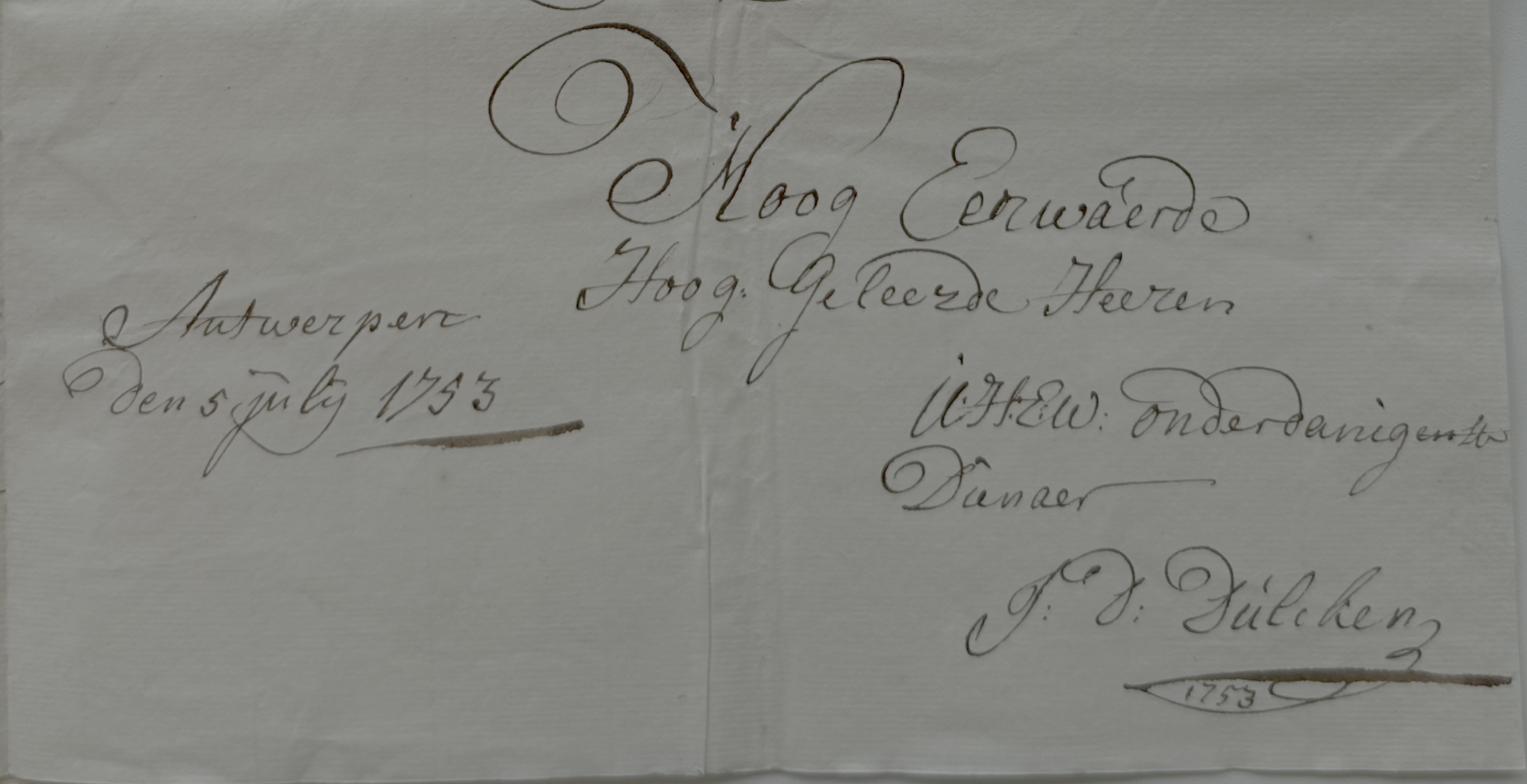
🇳🇱 : Bestemd voor de Synodale Kast:
Het vergeten dossier van Ds. Dipelius: Van Haiger tot Antwerpen
🇬🇧 : Intended for the Synodal Archive:
The Forgotten Dossier of Rev. Dipelius: From Haiger to Antwerp
🇩🇪 : Für das Synodalarchiv bestimmt:
Die vergessene Akte des Pfarrers Dipelius: Von Haiger nach Antwerpen
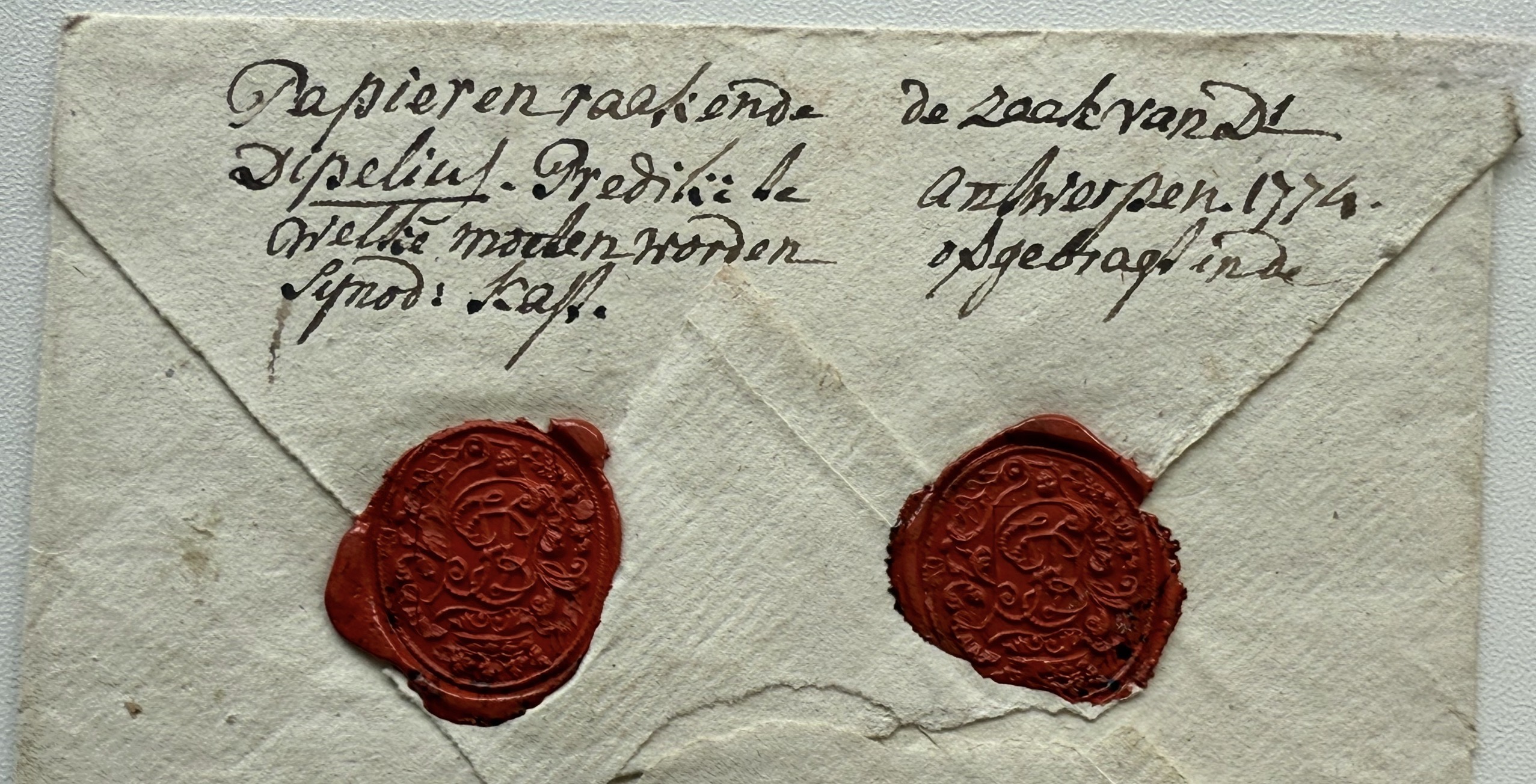
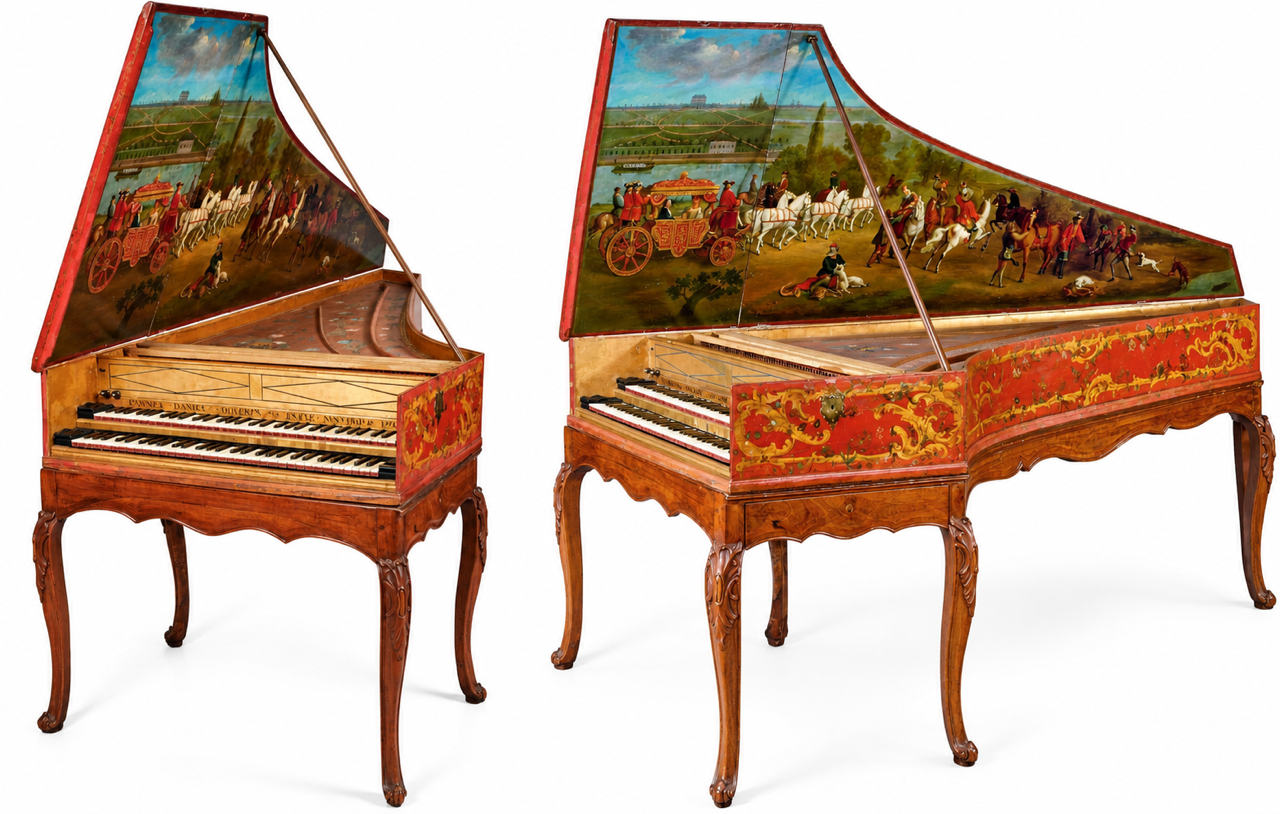
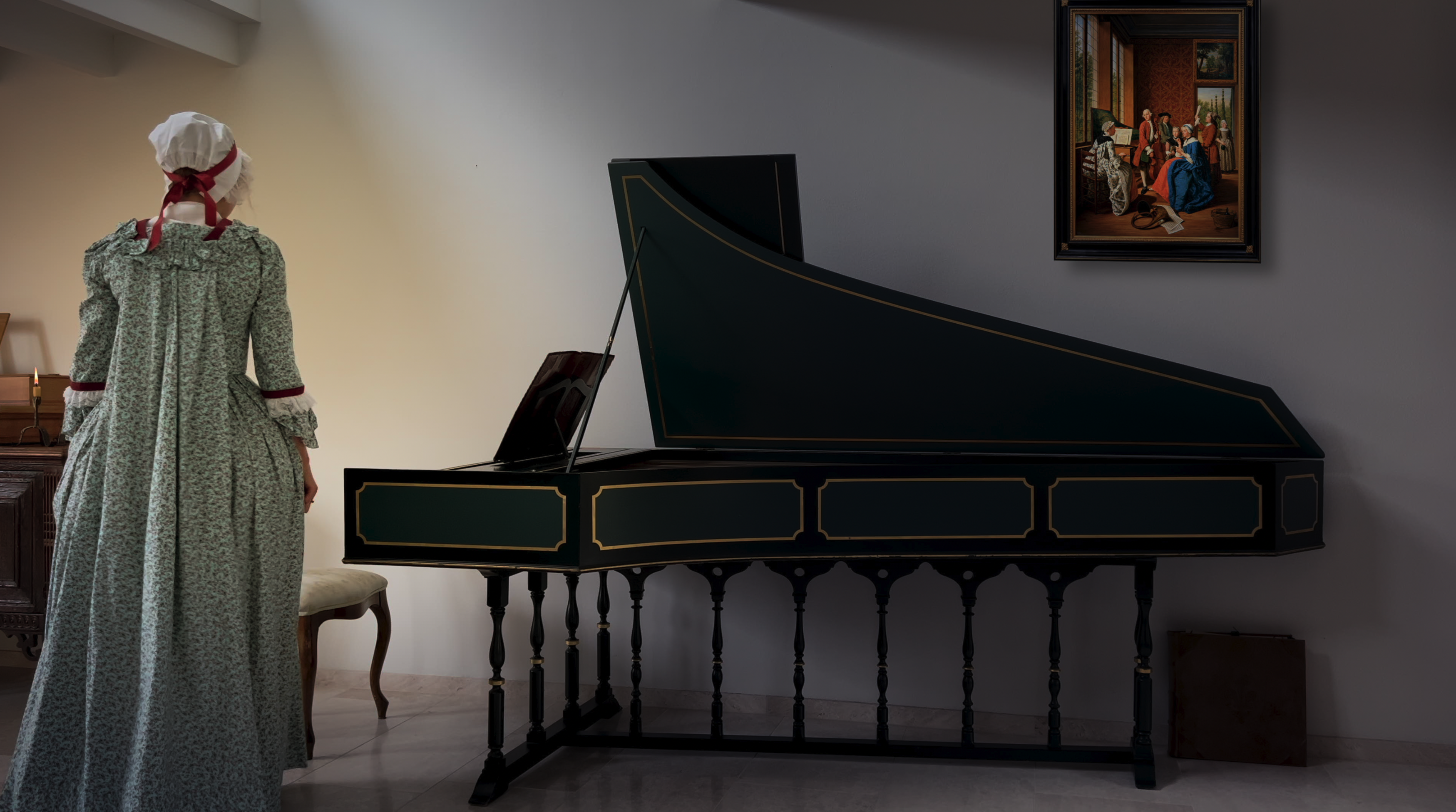
Klicken Sie auf das obige Video, um mehr über Susanne Maria Knöpffel zu erfahren, die die Werkstatt Dulcken nach dem Tod von Johannes Daniel Dulcken im Jahr 1764 nach Brüssel verlegte.
Harpsichords and Harlequins: Commedia dell’arte and the Migration of the Dulcken Family (1764)
Klavecimbelbouw en Komedie: De Commedia dell’arte en de Migratie van de Familie Dulcken (1764)

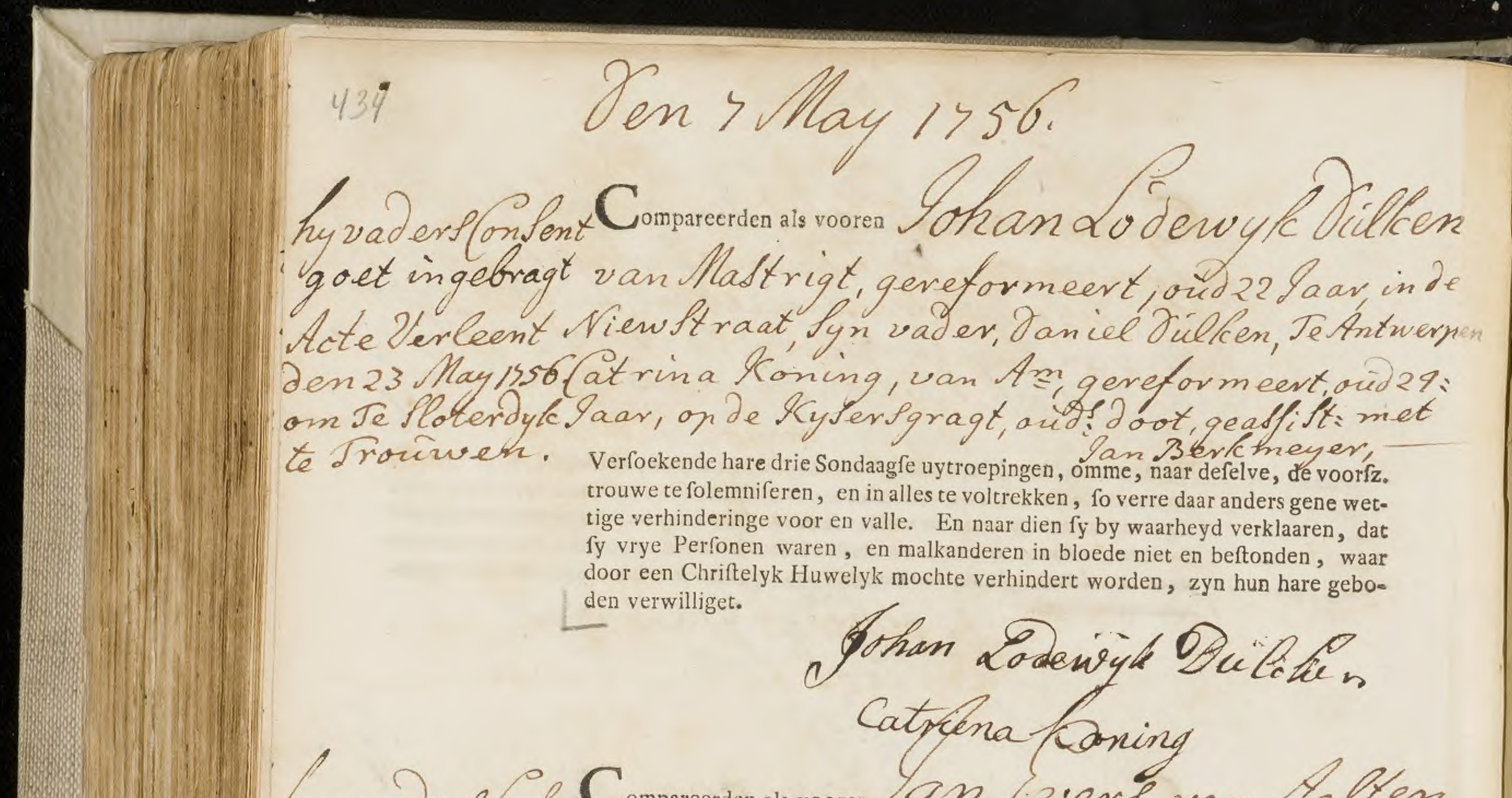
Johannes Lodewijk (Louis)Dülcken
(Maastricht 15 april 1735 – † between August 31, 1795 and December 27, 1799)
(Amsterdam 23 januari 1732- † ?)
Anna ?
Suite du 14 fructidor l’an trois aujourd'hui est comparu Louis Dulken facteur de clavesin [demt = demeurant?] rue Martin et du figuier N°32 lequel a dit qu'il [se rend] caution de la [citoyenne] Dulken son épouse envers le [citoyen] Bouvet [pour la somme] de cinq mille neuf cens quatre livres portée [au jugement?] du 2 [du présent?] et a signé Louis Dulcken
Fortsetzung des 14. Fructidor, Jahr III. Heute erschien Louis Dulken, Cembalobauer, wohnhaft in Nr. 32, Rue Martin et du Figuier, und erklärte, dass er für Bürger Dulken und dessen Ehefrau gegenüber Bürger Bouvet für eine Summe von fünftausendneunhundertvier Livres bürgt, wie im Urteil vom 2. des laufenden Monats festgesetzt, und unterzeichnete: Louis Dulken. Abschrift: Richard Etiévant
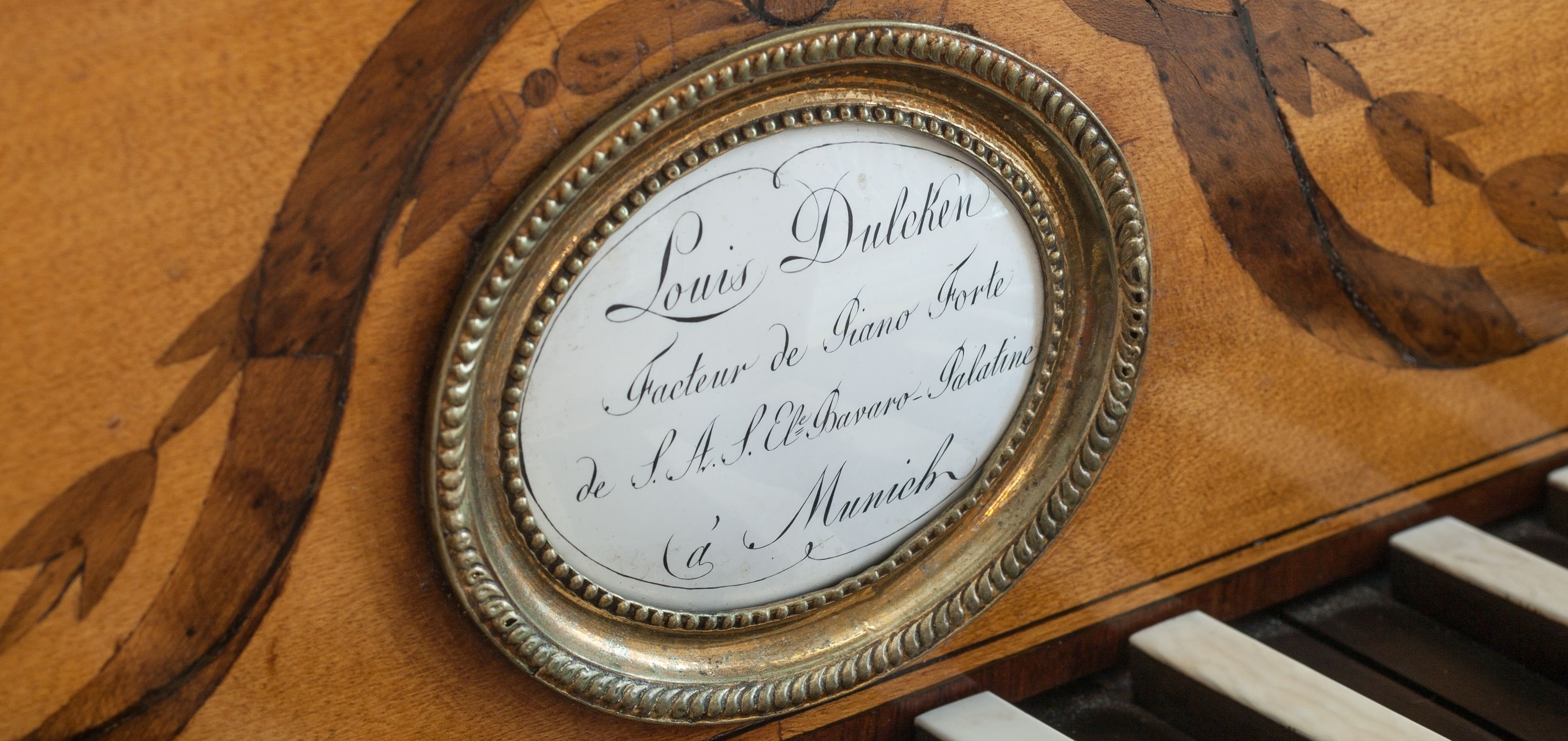
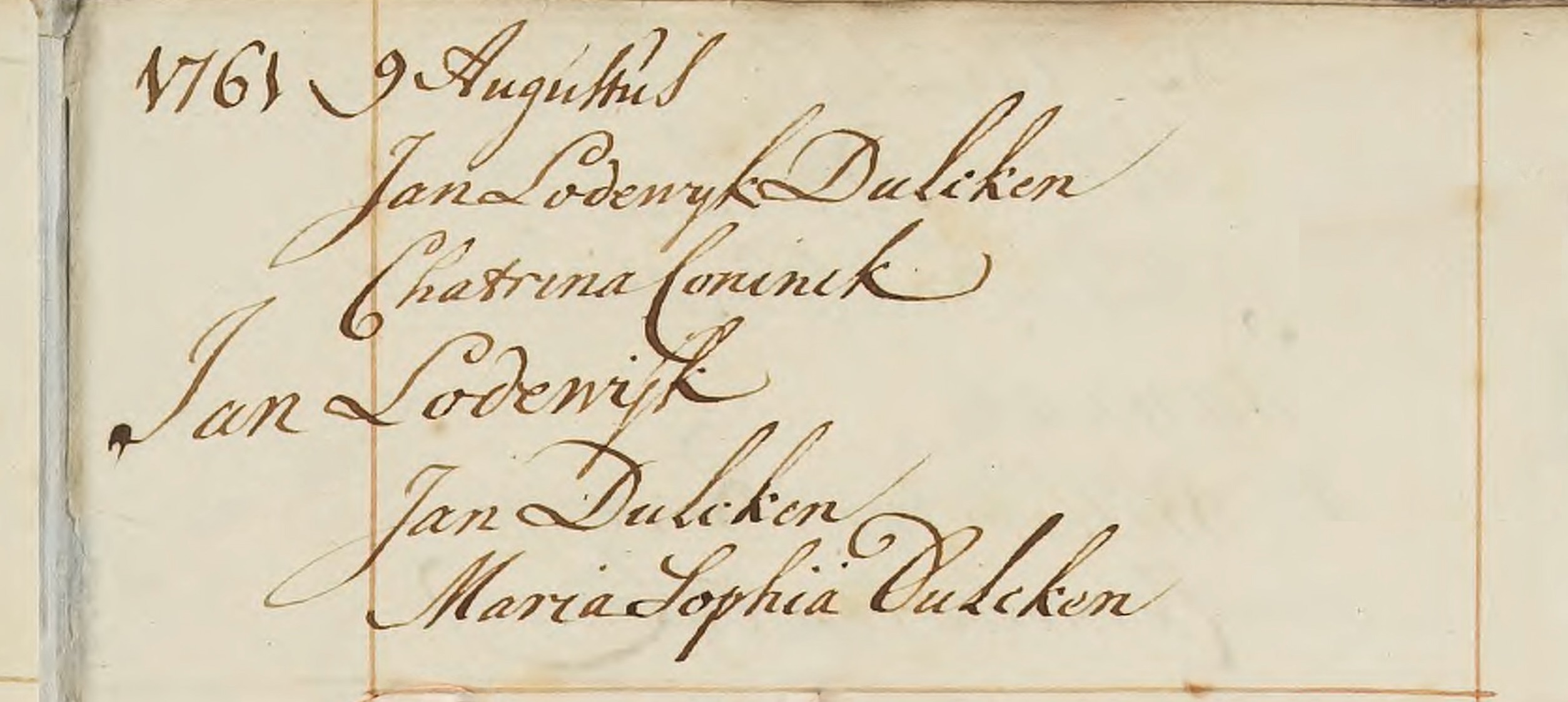
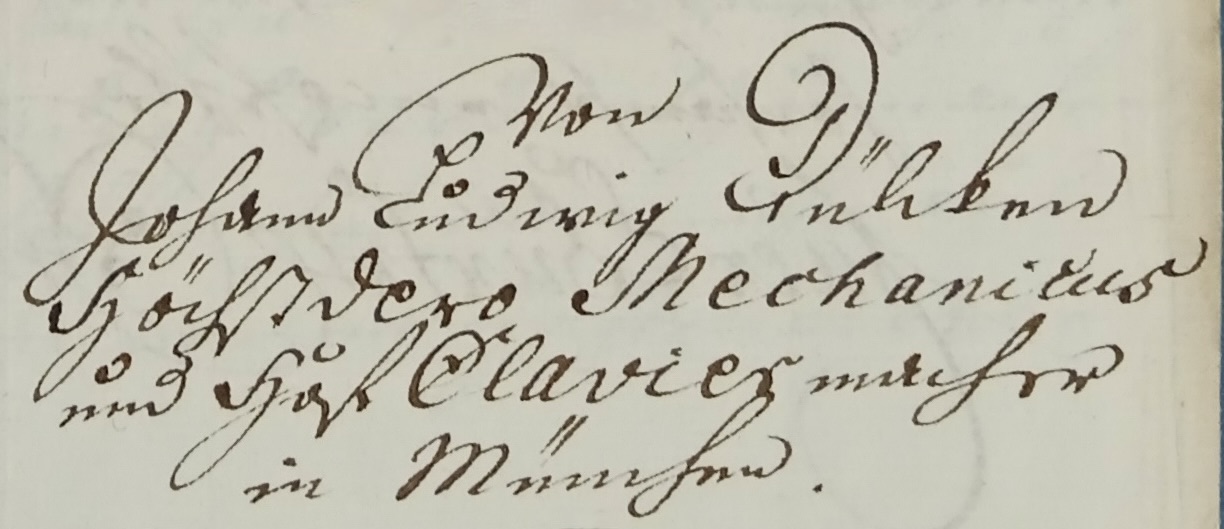
Jan Lodewijk (Louis) Dülcken (Amsterdam 9 augustus 1761 – † München 1836)
Sophie Lebrun (London 20 Juli 1781 – † München 23 Juli 1863)
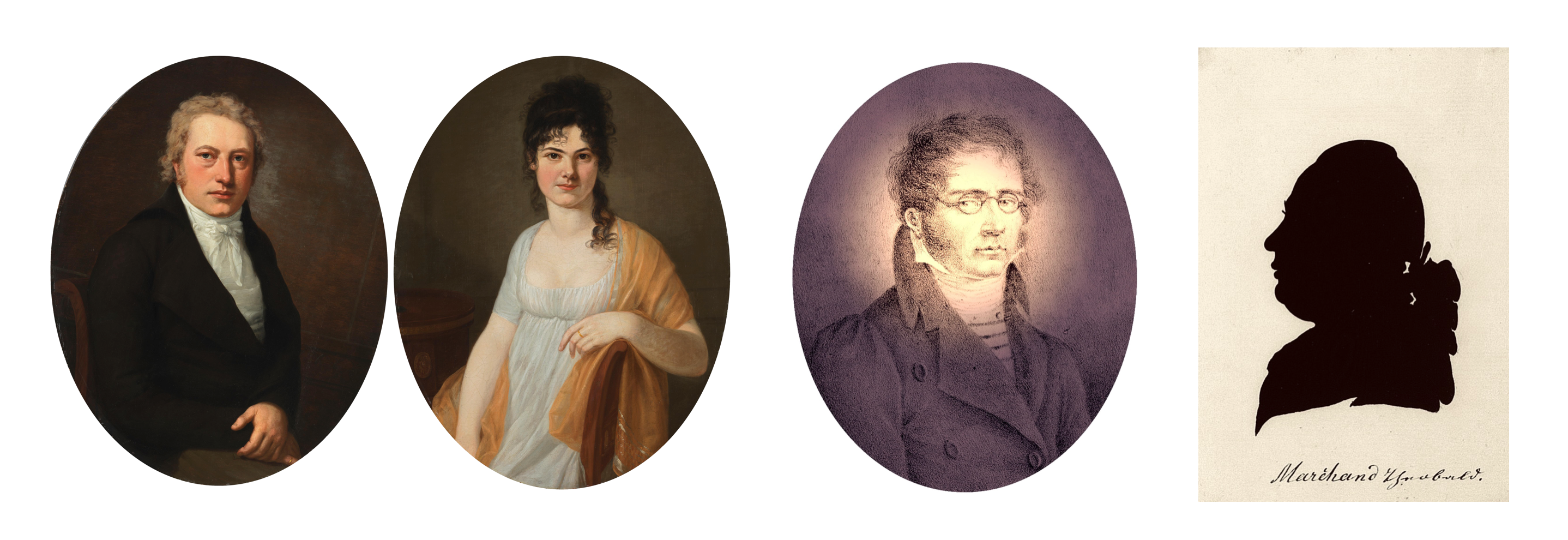
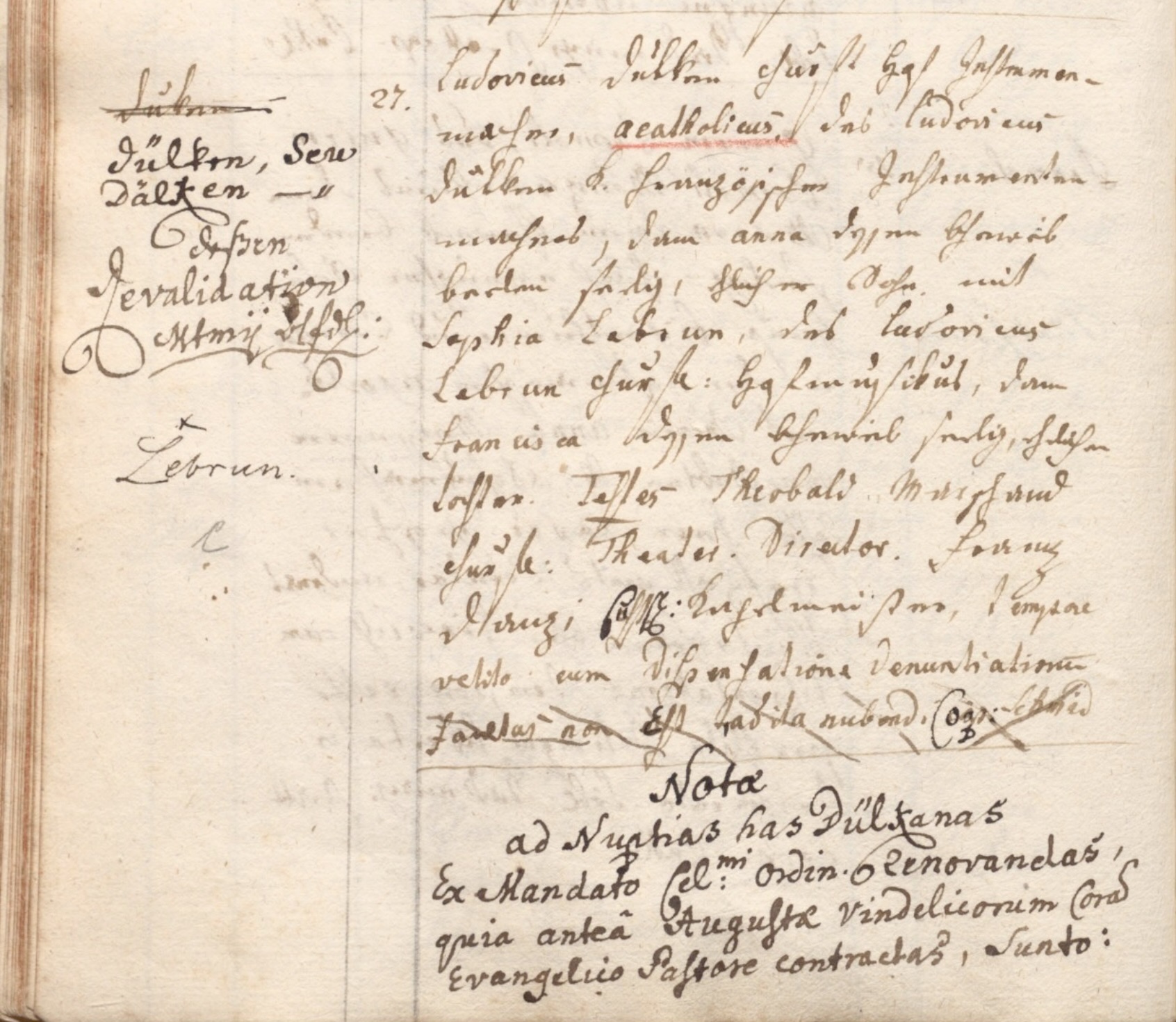
"Nomina Sponsoru[m] Dülken, seu Dälken dessen Revalidation m[a]t[ri]m[on]ii ____ x Lebrun
Dies Mensis 27. Decembris An[n]o 1799
Ludovicus Dülken churf[ürstlicher] Hof-Instrumen[ten]macher, acatholicus, des Ludovicus Dülken k[öniglich] französischen Instrumenten machers, dann Anna dessen Eheweib beiden seelig, ehlicher Sohn, mit Sophia Lebrun, des Ludovicus Lebrun churf[ürstlichen] Hofmusikus, dann Francisca dessen Eheweib seelig, ehelichen Tochter. Testes: Theobald Marchand churf[ürstlicher] Theater-Director, Franz Danzi c[h]u[r]f[ürs]t[licher] Kapelmeister, tempore vetito cum dispensatione denuntiationu[m]”.
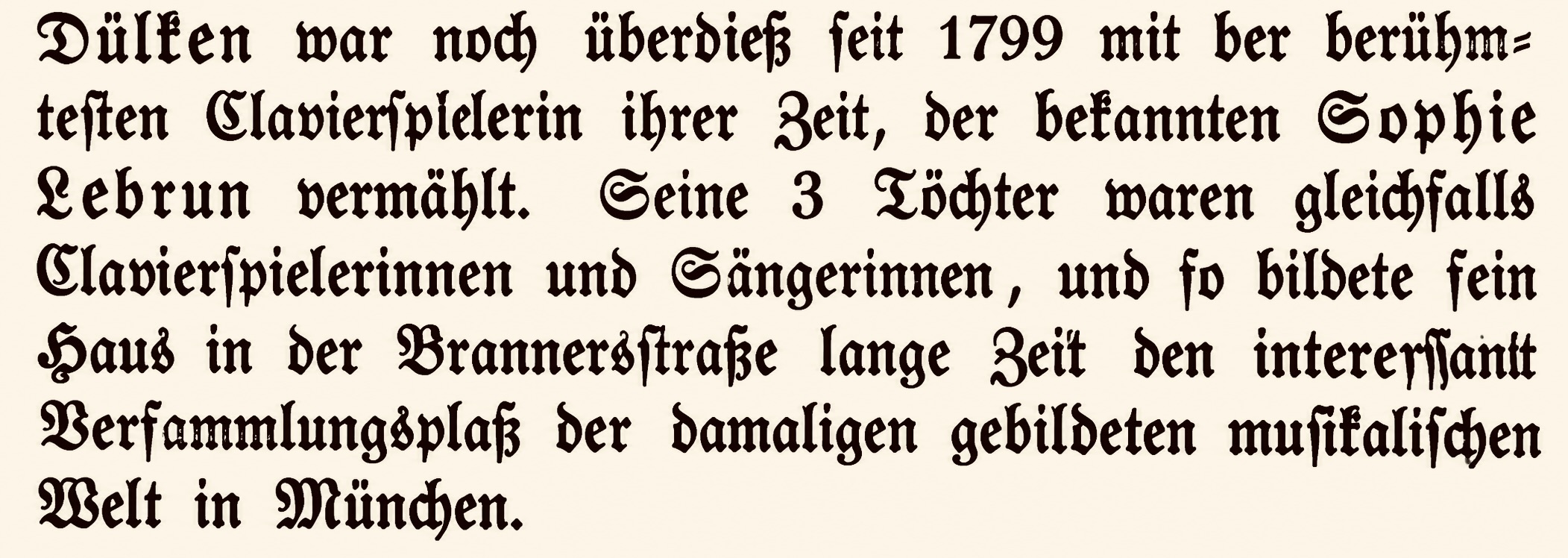
1800 - Theobald Ludovicus
1801 - Philippus Henricus
1803 - Louise
1805 - Franzisca Magdalena
1807 - Violanda Dulcken
1808 - Juliana Johanna
1813 - Alexander
1817 - Carolina Charlotte
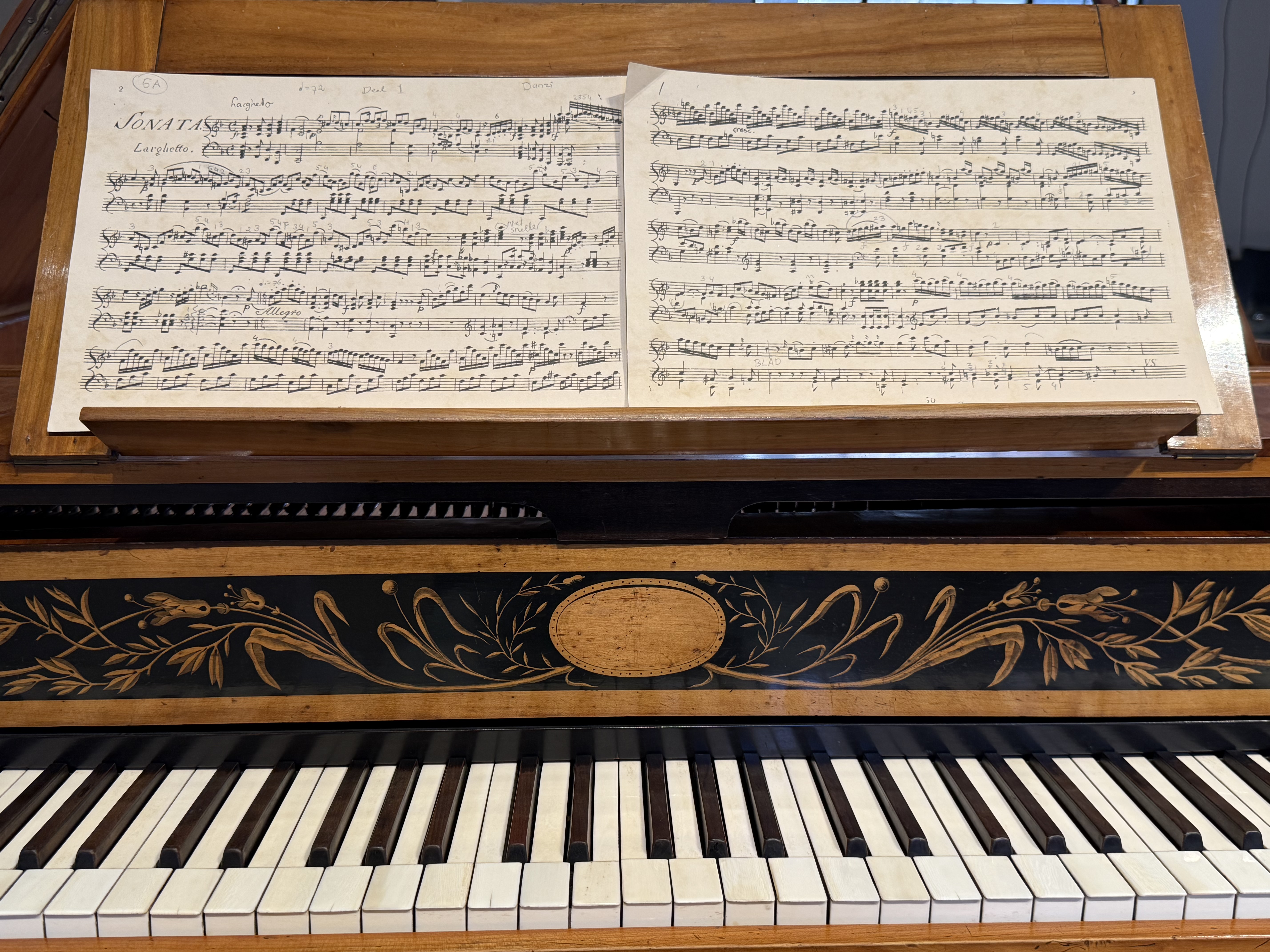
Click on the video above, featuring a song by Danzi/Marchand, to hear an original Louis Dulcken instrument from 1815.
27 mei 2025 BEIERS NATIONAAL MUSEUM - Paula Bär-Giese soprano & pianist
Madame Danzi (née Margaretha Marchand): "Dir nach 'oh' die ich liebe"- Louis Dulcken fortepiano 1815
Madame Danzi (née Margaretha Marchand): "Dir nach 'oh' die ich liebe"- Louis Dulcken fortepiano Paula Bär-Giese soprano & pianist Margaretha Marchand After the death of his wife, Leopold Mozart occasionally took students into his home, including Heinrich and Margarethe Marchand. April, 1782, Leopold wrote: ‘My son is in Vienna and is remaining there [...] Meanwhile I am having a pleasant time with two pupils whom I am instructing, the twelve-year- old son and the fourteen-year-old daughter of Herr Marchand, theatrical manager in Munich. I hope to make a great violinist and clavier player out of the boy and a good singer and excellent clavier player out of the girl.’ The family correspondence reveals that Leopold had a great concern for his students and their ‘ups and downs’. Leopold must have enjoyed being able to pass on his experiences and to have gifted students under his care once again. The children were also very attached to him; Margarethe even called him ‘dearest Papa’. Leopold continued to follow Gretl’s singing career after she had left his care, and he frequently sent proud reports to Nannerl. On 19 November, 1784: ‘Gretl sang splendidly, and received from the elector, who talked to her afterwards, and then from Maestro Prat etc. and all [the others] the greatest acclaim. You know that they have been longing to know here who was to become 2nda Donna, since Lisel Wendling declined to do the 2nda Donna opposite Mme le Brun, especially because this time it [is] an insignificant part with two very short ariettas. Louis Jr Dulcken received an education from his father in Hasselt, Antwerp and Paris but, via Hamburg, started working as a piano builder in Munich at the invitation of the Elector Karl Theodor. In 1799, he married the soprano & pianist Sophie Lebrun. Present at their wedding was the soprano, pianist and composer Margaretha Danzi, born Marchand. Sophie Dülcken-Lebrun (20 July 1781 – 23 July 1863) was a German pianist and composer, the daughter of Munich court oboist Ludwig August Lebrun and singer and composer Francesca Lebrun (born Danzi). Sophie Lebrun was born in London while her mother was on tour. She studied singing with her uncle, composer Franz Danzi, and piano with Andreas Streicher. After completing her studies, Sophie Lebrun toured in Europe and became a well-known singer & concert pianist. She married Munich court piano maker J.L. Dülcken in 1799 A Mannheim Family of Musicians: the Danzis & Self-accompanied singing. Mozart liked the Mannheimers more than the people in Salzburg: the Mannheimers were, in any case, real music professionals, while most of the Salzburgers were just semi-professionals or simple amateurs, often even of bad level. The Mannheim family of the Danzis was that kind of family of music professionals of high level Mozart wanted to be in connection with. The old Danzi was Innocenz Danzi, the famous first cellist at the Mannheim Court since 1754 and whose playing Mozart admired very much. In the winter of 1780, Mozart was commissioned by the elector Karl Theodor to write an opera, Idomeneo. The first performances took place at the Residenztheater in Munich on 29 January 1781. Mozart lavished high praise on Innocenz Danzi for his cello performance at the premiere of Idomeneo. Old Danzi had three children: Johann, who became violinist; Franziska, who became an important international Opera singer (better known as Lebrun, the surname of her husband, the famous oboist Ludwig August Lebrun, another Mannheimer); Franz, an important cellist, who became an important conductor and composer.
Auf den Spuren von Dulcken
Eine musikalische Instrumentenbauer-Dynastie in Wort und Video
ANBI
The Stichting Musick’s Monument produces Historical Art Productions. Pictures, music and text are integrated: You will hear music from the same period and the same area of origin as the visual materials; these are supplemented with explanatory text. From this combination evolves something like a Gesamtkunstwerk (a total work of art), a complete new way of digital art presentation since 2011.