 Foundation Musick's Monument
Franz Xaver Wagenshön, L’archiduchesse Marie-Antoinette au clavecin, avant 1770. Huile sur toile, Kunsthistorisches Museum, Vienne.
The Austrian Archduchess Maria Antonia Josepha Johanna arrived at the French court at the age of fourteen. Following her marriage in May 1770 to the dauphin, Louis-Auguste, she became Crown Princess of France under the name Marie Antoinette. Four years later, when her husband ascended the throne as Louis XVI, she became Queen of France.^1
From an early age, Marie Antoinette received a strong artistic education. She was an accomplished singer, dancer—having studied with the influential ballet master Jean-Georges Noverre—and instrumentalist. Music occupied a central place in her life. According to her lady-in-waiting, Jeanne-Louise-Henriette Campan, the young dauphine, despite a demanding schedule of court ceremonies and social obligations, devoted a considerable portion of each day to music, which soon became her principal occupation.^2

Her instrument of choice was the harp, which she pursued with notable dedication. Although her precise level of proficiency remains unknown, it is clear that she undertook intensive study with the German harpist Philipp Joseph Hinner, who in 1774 was appointed her maître de harpe and court harpist.^3 Hinner, a musician of exceptional talent who performed at the Concert Spirituel, likely composed a number of duets intended for performance with the Queen herself.

Marie Antoinette withe the rose
Opera also played a significant role at court. Marie Antoinette was an important patron of Christoph Willibald Gluck, who became her music teacher. He instructed her in harpsichord, flute, and vocal performance, and may also have encouraged her interest in composition.^4 Her reputation as a musically inclined monarch spread throughout Europe and attracted composers such as Wolfgang Amadeus Mozart, who hoped to secure a position at the French court through her patronage.^5
During his journey to Paris in 1777–1778, Mozart composed songs to French texts, possibly intended as a musical calling card. The choice of language and the suitability of the accompaniment for performance on the harp suggest a deliberate alignment with Parisian taste and courtly fashion.^6
Music at the court of Marie Antoinette, however, was more than a form of artistic expression. It also functioned as a marker of refinement, status, and social display. In this context, the harp acquired a distinctive cultural significance. As recent scholarship has suggested, it served not merely as a musical instrument but also as a visual and symbolic object, closely associated with elegance and sensuality. The posture of the performer, often depicted in graceful and subtly theatrical poses, contributed to this aesthetic.^7
Instrument makers responded to these cultural associations by producing elaborately decorated harps. Jean-Louis Naderman, for example, crafted instruments that were valued not only for their musical qualities but also as works of art. Such harps were frequently gilded, painted, and adorned with allegorical imagery, and were sometimes displayed prominently within interior spaces.^8
Although the harp was already known in Paris prior to 1770, Marie Antoinette’s enthusiasm contributed significantly to a surge in its popularity. At the same time, the instrument underwent important technical developments. Makers such as Sébastien Érard refined the pedal mechanism, building on earlier innovations by Georg Hochbrucker.^9 In collaboration with virtuosi such as Jean-Baptiste Krumpholtz, the harp evolved into a more expressive and technically versatile instrument. Krumpholtz introduced new playing techniques and mechanical improvements, including resonance-enhancing devices and damping mechanisms.^10
Composers who were not themselves harpists also began to take an interest in the instrument. Jean-David Hermann, for instance, produced some of the earliest harp concertos by a non-harpist, including one dedicated to Madame Élisabeth.^11
Mozart’s Concerto for Flute and Harp (1778) likewise belongs within this context. It was composed in Paris for the Duc de Guînes and his daughter. Notably, the work contains relatively few idiomatic harp techniques, which may reflect Mozart’s ambivalent attitude towards the instrument.^12
Other composers also contributed to the expanding harp repertoire. The Chevalier de Saint-Georges composed, among other works, a sonata for harp and flute, while Jean-Baptiste Cardon, in his influential method L’Art de jouer de la harpe (1784), played a significant role in the development of harp technique and virtuosity.^13
The rise of the harp at the French court thus reflects a broader cultural dynamic in which music, aesthetics, and social representation were closely intertwined. Yet this refined world existed on the brink of profound historical upheaval—one that would ultimately determine the fate of Marie Antoinette.

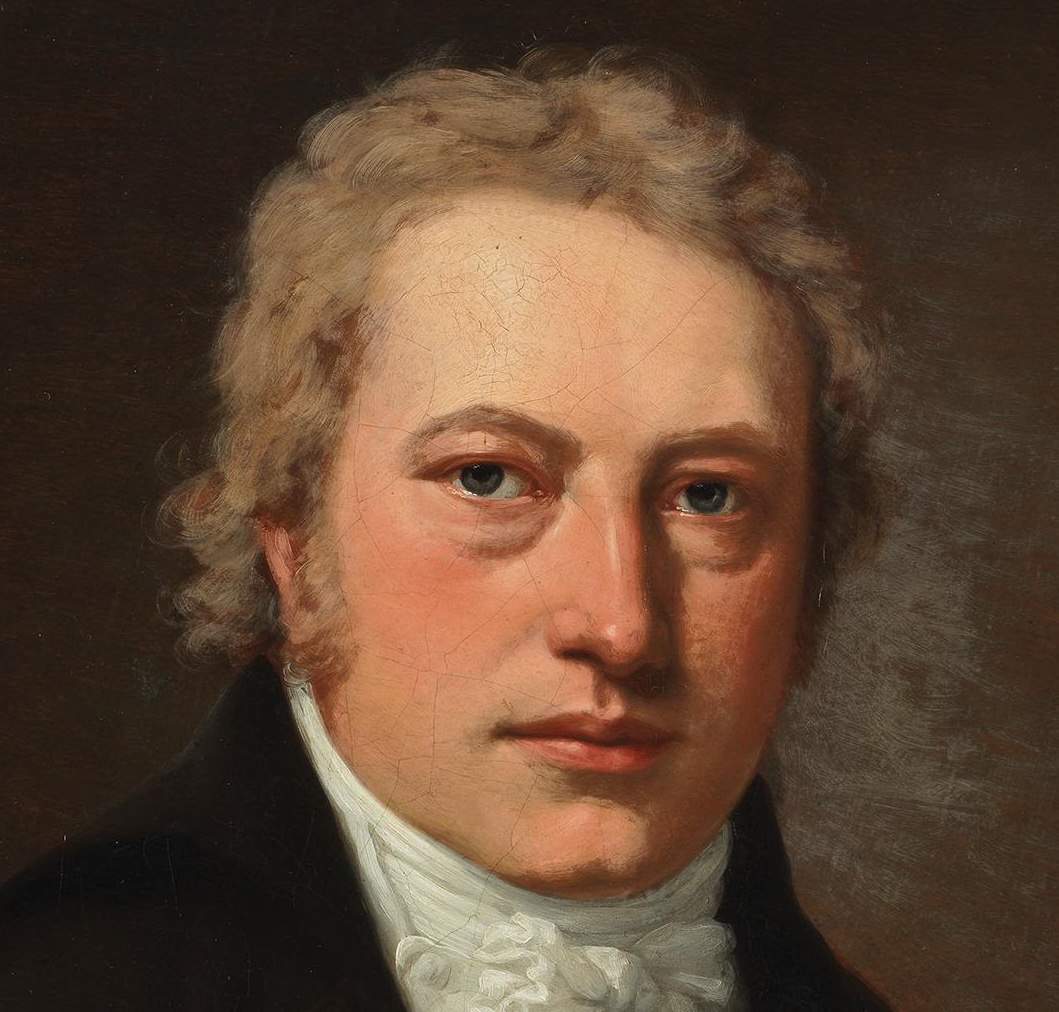
Christoph Willibald Gluck
Neuchatêl Museum of Art & History
Volgens de vorige eigenaren was het instrument ooit eigendom van Marie-Antoinette, koningin van Frankrijk, die het schonk aan Mademoiselle de Trémauville, een van haar hofdames en verloofde van luitenant Georges de Montmollin, die op 10 augustus 1792 in Parijs omkwam tijdens de bestorming van de Tuilerieën.
In 1745 onderging de Ruckers-klavecimbel een grootschalige restauratie, hoogstwaarschijnlijk in Parijs. Aan het einde van dit uitgebreide moderniseringsproces beschikte het instrument over twee klavieren van 58 toetsen en drie sets snaren. Zowel de basis als de decoratieve afbeeldingen van de fabels van Jean de La Fontaine, geschilderd op een achtergrond van bladgoud, dateren eveneens uit 1745. De schilderingen aan de binnenzijde van het deksel en een deel van het klankbord zijn origineel (1632). Volgens de vorige eigenaren behoorde het instrument ooit toe aan Marie-Antoinette, koningin van Frankrijk, die het schonk aan Mademoiselle de Trémauville, een van haar hofdames en verloofde van luitenant Georges de Montmollin, die op 10 augustus 1792 in Parijs omkwam tijdens de bestorming van de Tuilerieën.


The Erard piano once belonged to Marie Antoinette. 

The guitar once belonged to Marie Antoinette.
THE GUITAR ORIGINALLY HAD FIVE STRINGS BUT WAS ADAPTED IN THE EARLY 19TH CENTURY 

References
Antonia Fraser, Marie Antoinette: The Journey (London: Phoenix, 2001).
Jeanne-Louise-Henriette Campan, Memoirs of the Private Life of Marie Antoinette (1823).
Grove Music Online, “Hinner, Philipp Joseph”.
David Charlton, Gluck and the French Theatre in Vienna (Oxford, 1989).
Stanley Sadie, Mozart: The Early Years (Oxford, 2006).
Mozart Briefe und Aufzeichnungen.
Deirdre Loughridge (Chicago, 2016).
Musée de la musique Paris.
Grove Music Online, “Érard, Sébastien”.
Grove Music Online, “Krumpholtz, Jean-Baptiste”.
Rainer Gstrein, studies on early harp concerto repertoire.
Stanley Sadie.
Grove Music Online, “Cardon, Jean-Baptiste”; “Saint-Georges, Joseph Bologne”.