 Foundation Musick's Monument
1782 - "Bull (-) Flügelmacher in Antwerpen; geb. in Deutschland. Seine Doppelflügel sind sehr berühmt, wovon er das Stück für 100 Dukaten verkauft." Musikalischer Almanach für Deutschland auf das Jahr 1782, p. 197

"Bull, wohnt in Antwerpen, verkauft seine Doppel-Flügel für 100 Dukaten." Tagebuch seiner Musikalischen Reisen Durch Böhmen, Sachsen ..., 1773, p. 12

J. Lambrechts-Douillez, The History of Harpsichord Making in Antwerpen in the 18th Century, in Friedemann Hellwig (ed.), Studia organologica : Festschrift für John Henry van der Meer zu seinem fünfundsechzigsten Geburtstag.
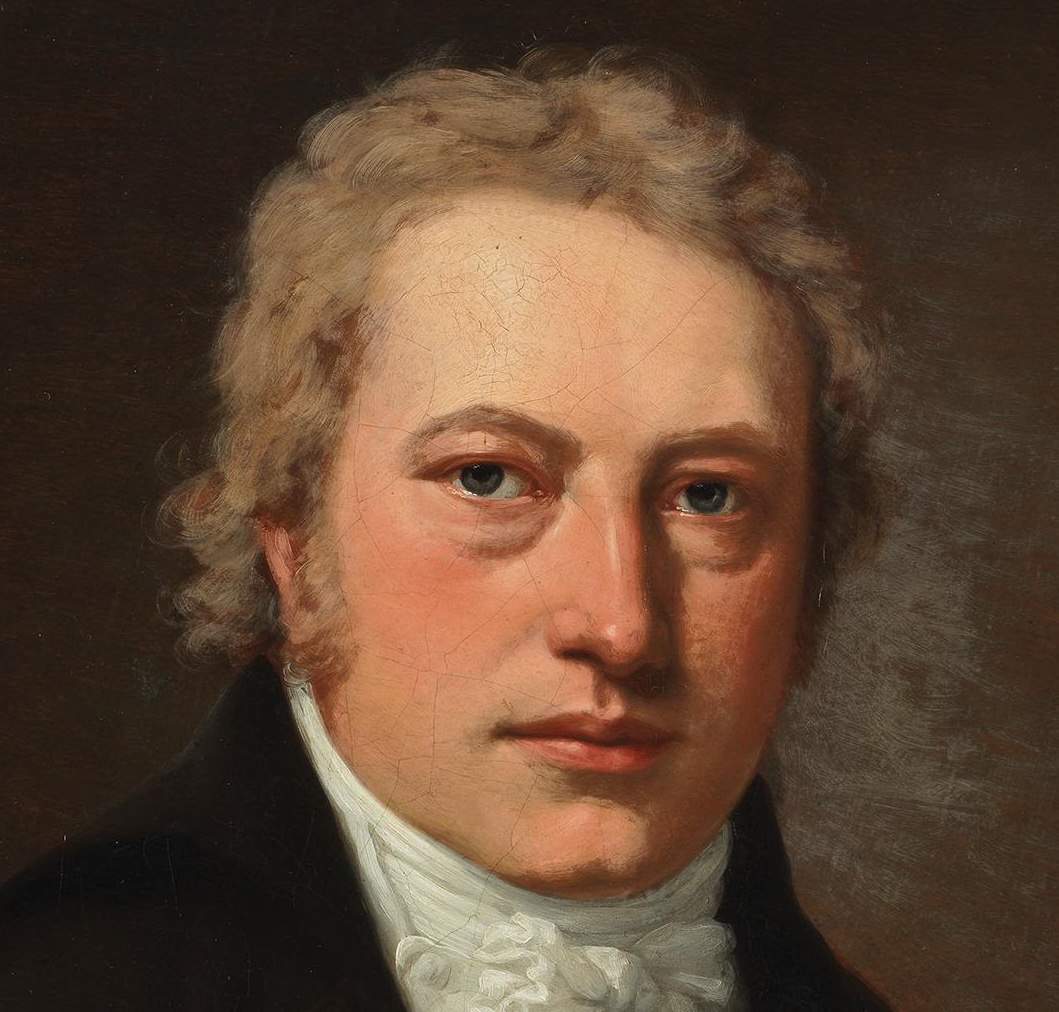
JOANNES PETRUS BULL (BOHLL) (ERCKRATH, c. 1723 - ANTWERPEN, 9.3. 1804) is the third maker mentioned by Burney. We were able to find only a few documents relating to this last harpsichord maker in Antwerpen. He was born in Erckrath in Germany50, according to one document, another mentioning Düsseldorf51. On his death on 9th March 1804 he was 80 years and 10 months old. The year of his birth is therefore 1723. He was the son of Jan Henri Bohll and Gertrude Raurathe. He remained unmarried and rented a house in the Kloosterstraat. He is sometimes referred to as harpsichord maker, sometimes as carpenter. It has often been suggested that he was a descendant of the 17th century English composer and organist at the Antwerpen cathedral; but the newly-found documents ruled this suggestion out. It is hoped that this survey may lead to a better understanding of harpsichord making in Antwerpen during the 18th century. I am very pleased to offer this contribution to my dear friend J. H. van der Meer, whom I first met in about 1955 and who has since always encouraged me to continue my research in the archives of Antwerpen.
50 Antwerpen, Algemeen Rijksarchief, Akten van Overlijden, Burgerlijke stand, l'an XII 1803-1804.
51 A.S.A., Modern Archief (M.A.) 4755, Telling jaar IV, 4e wijk, nº 41.

Members of the Dulcken family were distinguished harpsichord builders in the region during the 18th century. At least eight harpsichords by Joannes Daniel Dulcken (bap. 1706; d 1757), who worked mainly in Antwerp, are known (instruments made in Brussels and bearing later dates are the work of his sons). His Flemish two-manual harpsichord action, 18th century harpsichords tend to have long scales, the single-manual harpsichord of about 1740 (private collection, Edinburgh) having a c″ scale of nearly 39 cm. Consequently the cases are long, his two-manual instruments being some 260 cm. Occasionally he used a singular type of construction with both an inner and an outer bentside. All his mature instruments have a five-octave compass, disposed 2 × 8′, 1 × 4′, often with a cut-through lute stop on the upper manual. Dulcken preferred to use a dogleg jack for the normal upper 8′ rather than a coupler. But since the lute register and the lower 8′ usually pluck the same choir, with the second unison strings sounding only when the dogleg 8′ is engaged, no dialogue of lower 8′ and lute stop is normally possible and the upper manual is limited to providing a softer sound contrasting with the tutti of the lower manual. Johannes Petrus Bull, another German who settled in Antwerp, was apprenticed to J.D. Dulcken there. Four of his instruments have survived, dated 1776 to 1789, all of five-octave compass and disposed 2 × 8′, 1× 4′. Three are two-manual instruments. One of these, dated 1778, has most ingeniously wrought, very wide upper-manual dogleg jacks, with two tongues facing in opposite directions.
These jacks can pluck either 8′ choir and thus a combination of 2 × 8′ is available on each manual, since the dogleg and the lute stop can be combined on the upper keyboard. But the lower 8′ jacks are fitted with peau de buffle plectra so that only the dogleg 8′ is available to give a normal quilled 8′ sound on the lower manual. Thus, as with Dulcken, no dialogue of a quilled lower 8′ and a lute stop is possible in the manner of the English double harpsichord. A later two-manual instrument by Bull (1789) lacks the double tongues in the dogleg upper-manual jacks, but it is so arranged that damper interference between the lower 8′ jacks and the dogleg upper 8′ prevents the use of the upper keyboard as an echo manual.
Edwin M. Ripin, Howard Schott/Lance Whitehead